
Loading…
Loading…

VACQ (Vector Acquisition Corporation) is no longer actively trading.
This usually means the company was acquired and taken private, delisted from its exchange, or its ticker has been retired. Every price, valuation, dividend, and analyst figure on this page is frozen at the last available trading session and reads as historical reference — not a current-day signal.

VACQ does not currently pay a dividend.
See price against where its own fundamentals say it should trade — the shaded gap is the discount or premium, across five valuation lenses.
Click below to see what's inside, then upgrade to unlock for VACQ and 80,000+ other tickers.
See exactly how VACQ's revenue becomes profit — a Sankey that traces revenue (and its reported segments) through gross profit, operating expenses, and net profit, with the year-over-year change on every line.
The same diagram the Chart Builder draws, right on the Summary tab. Upgrade to unlock it for VACQ and 80,000+ other tickers.
Established in 2020 and headquartered in San Francisco, California, Vector Acquisition Corp. primarily focuses on completing business combinations. These endeavors include mergers, exchanges of capital stock, acquisitions of assets or shares, or corporate reorganizations with other enterprises.

LONG BEACH, Calif.--(BUSINESS WIRE)--Rocket Lab USA, Inc. (Nasdaq: RKLB) (“Rocket Lab” or the “Company”), a global leader in launch services and space systems, today announced that it completed its previously announced merger with Vector Acquisition Corporation (Nasdaq: VACQ) (“Vector”) to take Rocket Lab public. Vector’s shareholders approved the merger at an annual general meeting of Vector’s shareholders on August 20, 2021. The combined company will retain the Rocket Lab USA, Inc. name and will commence trading on the Nasdaq Capital Market on August 25, 2021, with its common stock and warrants trading under the new ticker symbols, “RKLB” and “RKLBW”, respectively. The gross amount of cash that Rocket Lab will receive from Vector’s trust account and PIPE financing that closed substantially concurrently with the merger, before transaction expenses, equals approximately $777 million. The proceeds are expected to accelerate organic and inorganic growth in Rocket Lab's space systems business, drive the development of the Company’s reusable 8-ton payload class Neutron rocket, and support potential future expansion into space applications enabling Rocket Lab to deliver data and services from space. “Our team is motivated by the enormous impact we can have on Earth by making it easier to get to space and to do incredible things there. We are excited to be making that a reality by embarking on our next chapter as a public company,” said Rocket Lab founder and Chief Executive Officer, Peter Beck. “With our Electron rocket and Photon spacecraft, we’ve simplified space, making it easy and affordable for companies, scientists, governments, and entrepreneurs alike to get their ideas to orbit. Today, we take the next step toward unlocking the full potential of space, paving the way for our larger Neutron launch vehicle which will deploy the constellations of the future, and supporting our potential future expansion into space applications. I am thrilled to declare space open for business.” “As a leader in democratizing access to space, Rocket Lab is well positioned to capitalize on exciting opportunities in commercial and government-sponsored space industry innovation,” said Alex Slusky, CEO of Vector and Founder & Chief Investment Officer of Vector Capital. “We are confident in Rocket Lab’s ability to deliver outstanding performance and reliability to drive long-term value for shareholders.” Mr. Beck will continue to lead the combined company. Mr. Slusky will join the Board of Directors of the combined company alongside existing Directors Sven Strohband of Khosla Ventures, David Cowan of Bessemer Venture Partners, Matt Ocko of DCVC, Mike Griffin, Merline Saintil and Jon A. Olsen. As a public company, Rocket Lab’s position as a leader in end-to-end space services spanning launch, spacecraft manufacture, and on-orbit spacecraft management is further strengthened. Since Rocket Lab’s first orbital launch in 2018, the Company’s innovative Electron launch vehicle has become the second most frequently launched U.S. rocket annually. To date, Rocket Lab has delivered 105 satellites to orbit for more than 20 public and private-sector organizations and technology-leading constellation operators. Rocket Lab’s customer base is evenly split across government and commercial organizations including the National Aeronautics and Space Administration (NASA), the National Reconnaissance Office (NRO), and the Defense Advanced Research Projects Agency (DARPA), as well as commercial satellite leaders. Rocket Lab has an established space systems business that develops satellite and spacecraft solutions for a range of commercial and government missions, from low-Earth orbit constellations to high-complexity deep space and interplanetary missions. Rocket Lab’s Photon spacecraft family delivers a satellite-as-a-service solution that eliminates the typical high cost, time and complexity customers face when building their own satellites. With Rocket Lab, customers can buy a launch, satellite, ground services and on-orbit management as a turn-key package, resulting in a disruptive reduction in cost and time to orbit. Rocket Lab has two operational Photons on orbit, with additional missions to the Moon, Mars and Venus planned, including the CAPSTONE mission to lunar orbit in support of NASA’s Artemis program. Morgan Stanley & Co. LLC is serving as sole financial advisor to Rocket Lab, with Goodwin Procter LLP serving as legal counsel to the Company. Morgan Stanley & Co. LLC is also acting as the lead placement agent for Vector on the PIPE and capital markets advisor. Deutsche Bank Securities is serving as sole financial advisor and capital markets advisor to Vector as well as placement agent on the PIPE, with Kirkland & Ellis LLP serving as legal advisor. Canaccord Genuity, Cowen and Stifel also acted as capital markets advisors to Vector. To celebrate the completion of the business combination, Rocket Lab will be ringing the Nasdaq opening bell at 9:30 a.m. ET on August 25, 2021. A live stream of the event and replay can be accessed by visiting www.rocketlabusa.com/live-stream About Rocket Lab USA, Inc. Rocket Lab is a global leader in space, building rockets and spacecraft that make it easier to get to orbit and to do amazing things there. Founded in 2006, Rocket Lab provides end-to-end mission services that provide frequent and reliable access to space for civil, defense, and commercial markets. Headquartered in Long Beach, California, Rocket Lab designs and manufactures the Electron launch vehicles and Photon satellite platform and is developing the Neutron launch vehicle. Since its first orbital launch in January 2018, Rocket Lab’s Electron launch vehicle has become the second most frequently launched U.S. rocket annually and has delivered 105 satellites to orbit for private and public sector organizations, enabling operations in national security, scientific research, space debris mitigation, Earth observation, climate monitoring, and communications. Rocket Lab has two launch sites, including a private orbital launch site located in New Zealand, and a second launch site in Virginia, USA expected to be operational by the end of 2021. Rocket Lab’s Photon spacecraft platform has been selected to support NASA missions to the Moon and Mars, as well as the first private commercial mission to Venus. To learn more, visit www.rocketlabusa.com. About Vector Vector Acquisition Corporation (Nasdaq: VACQ) is a blank check company led by veteran technology investor Alex Slusky. In addition to serving as CEO of Vector Acquisition Corp., Mr. Slusky is Founder and Chief Investment Officer of Vector Capital, a private investment firm focused on the technology sector. He has more than 25 years of experience investing in and operating private and public technology companies as well a deep understanding of trends, market cycles, vertical expertise, and the proven ability to identify, diligence, structure, and transform technology businesses. The company leverages the full resources of Vector Capital to transform operations and accelerate growth of its target investments. For additional information, visit https://www.vectorcapital.com. Forward-Looking Statements This press release may contain certain “forward-looking statements” within the meaning of the Private Securities Litigation Reform Act of 1995, Section 27A of the Securities Act of 1933, as amended, and Section 21E of the Securities and Exchange Act of 1934, as amended, including statements regarding Rocket Lab’s or their respective management teams’ expectations, hopes, beliefs, intentions or strategies regarding the future. The words “anticipate”, “believe”, “continue”, “could”, “estimate”, “expect”, “intends”, “may”, “might”, “plan”, “possible”, “potential”, “predict”, “project”, “should”, “would” and similar expressions may identify forward-looking statements, but the absence of these words does not mean that a statement is not forward-looking. These forward-looking statements are based on Rocket Lab’s current expectations and beliefs concerning future developments and involve a number of risks, uncertainties (some of which are beyond Rocket Lab’s control) or other assumptions. Many factors could cause actual future events to differ materially from the forward-looking statements in this press release, including but not limited to: (i) Rocket Lab’s future plans regarding the proceeds from the merger and PIPE financing, including the number of Vector shareholders, if any, that exercise appraisal rights in connection with the merger, (ii) factors impacting the development of the Neutron launch vehicle and Rocket Lab’s ability to drive growth in its space systems business, and (iii) potential delays in the certification of Rocket Lab’s flight termination system software by NASA, which could delay the timing of when our second launch site becomes operational. There can be no assurance that the future developments affecting Rocket Lab or any successor entity of the merger will be those that we have anticipated. Except as required by law, Rocket Lab is not undertaking any obligation to update or revise any forward-looking statements whether as a result of new information, future events or otherwise.

Stocks can often move on press releases and company updates. Two space-related stocks are moving higher Tuesday on announcements from the companies with shareholders reacting positively to the news.
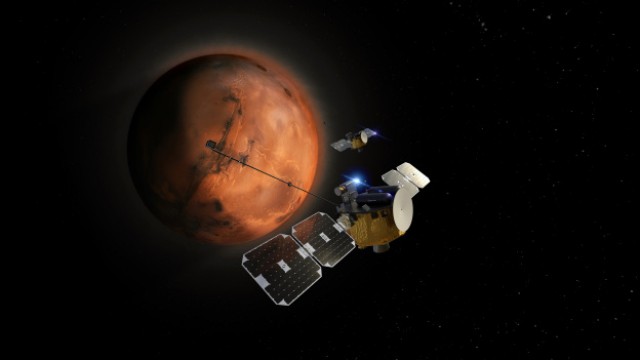
Rocket Lab is one step closer to going to Mars with NASA's approval of the company's Photon spacecraft for an upcoming science mission. If all continues according to plan the two craft will launch in 2024 and arrive on the Red Planet 11 months later to study its magnetosphere.
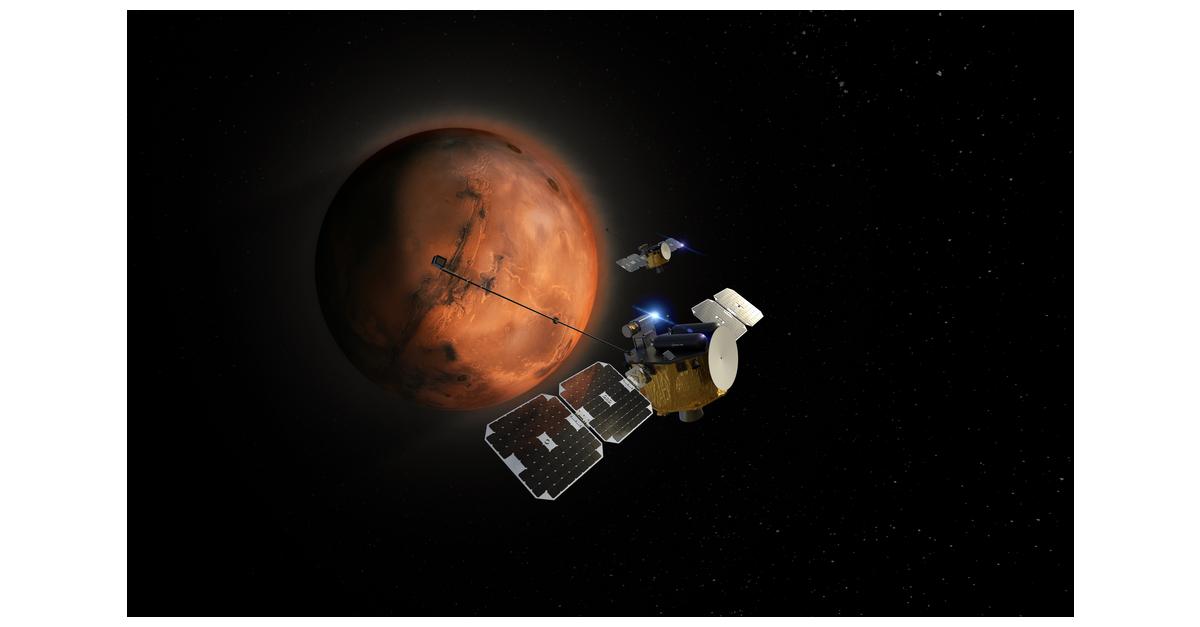
LONG BEACH, Calif.--(BUSINESS WIRE)--Rocket Lab, a global leader in dedicated launch and space systems, today announced it will begin final mission design and manufacture to supply two interplanetary Photon spacecraft for a science mission to Mars, delivering Decadal-class science at a fraction of the cost of typical planetary missions. The Escape and Plasma Acceleration and Dynamics Explorers (ESCAPADE) mission will orbit two Rocket Lab-built Photon spacecraft around Mars to understand the structure, composition, variability, and dynamics of Mars' unique hybrid magnetosphere. The mission will also support crewed exploration programs like Artemis through improved solar storm prediction. ESCAPADE is the latest of only three missions proceeding under the current round of NASA’s Small Innovative Missions for Planetary Exploration (SIMPLEX) program to conduct compelling planetary space science with small satellites and provide more opportunities for flight experience to the science community. The ESCAPADE mission, led by principal investigator Robert Lillis at the University of California, Berkeley, is the latest SIMPLEX mission to pass Key Decision Point-C (KDP-C), confirming it for implementation in preparation for launch to Mars in 2024. The ESCAPADE mission is managed by the NASA Science Mission Directorate’s Heliophysics Division and will be the first Heliophysics mission to visit another planet. Following deployment from a NASA-provided commercial launch vehicle, the pair of Photons will conduct an 11-month interplanetary cruise before inserting themselves into elliptical orbits around Mars to begin the science phase. Both Photons incorporate satellite subsystems developed and manufactured by Rocket Lab, including star trackers, reaction wheels, ranging transceivers for deep space navigation, and in-space propulsion systems. By leveraging vertically-integrated spacecraft manufacturing, the ESCAPADE mission will be delivered at a fraction of the cost of traditional planetary missions. This supports U.S. national strategy for Decadal-class science by increasing the pace of scientific discovery and more sustainable crewed exploration by improving our understanding of the space environment. Rocket Lab’s founder and CEO, Peter Beck, says “ESCAPADE is an innovative mission that demonstrates that advanced interplanetary science is now within reach for a fraction of traditional costs, and we’re proud to make it possible with Photon,” he said. “Passing the Key Decision Point is a critical milestone in ESCAPADE’s development and is testament to the world-class science and engineering work of the UC Berkeley and Rocket Lab teams. We are delighted to receive the green light from NASA to proceed to flight.” ESCAPADE is one of several missions beyond Earth orbit currently under development by Rocket Lab using the Photon spacecraft, including the CAPSTONE mission to the Moon in support of NASA’s Artemis program and Rocket Lab’s own privately-funded science mission to Venus. Images and video content: www.rocketlabusa.com/news/updates/link-to-rocket-lab-imagery-and-video About Rocket Lab: Rocket Lab is a global leader in space, building rockets and spacecraft that make it easier to get to orbit and to do amazing things there. Founded in 2006, Rocket Lab provides end-to-end mission services that provide frequent and reliable access to space for civil, defense, and commercial markets. Headquartered in Long Beach, California, Rocket Lab designs and manufactures the Electron and Neutron launch vehicles and Photon satellite platform. Rocket Lab’s Electron launch vehicle is the second most frequently launched U.S. rocket annually and has delivered more than 100 satellites to orbit for private and public sector organizations, enabling operations in national security, scientific research, space debris mitigation, Earth observation, climate monitoring, and communications. Rocket Lab and Vector Acquisition Corporation (Nasdaq: VACQ), a publicly-traded special purpose acquisition company, announced a proposed business combination in the first quarter of 2021 (https://bwnews.pr/3yBYYzd). Vector’s shareholders voted to approve its proposed merger with Rocket Lab USA, Inc. at its annual general meeting of shareholders held on August 20, 2021. The merger is scheduled to close on August 25, 2021, and the common stock and warrants of the combined company, which will be renamed "Rocket Lab USA, Inc.", are set to commence trading on the Nasdaq Capital Market on August 25, 2021, under the new ticker symbols, “RKLB” and “RKLBW”, respectively. Forward-Looking Statements This press release may contain certain “forward-looking statements” within the meaning of the Private Securities Litigation Reform Act of 1995, Section 27A of the Securities Act of 1933, as amended, and Section 21E of the Securities and Exchange Act of 1934, as amended, including statements regarding Vector’s, Rocket Lab’s or their respective management teams’ expectations, hopes, beliefs, intentions or strategies regarding the future. The words “anticipate”, “believe”, “continue”, “could”, “estimate”, “expect”, “intends”, “may”, “might”, “plan”, “possible”, “potential”, “predict”, “project”, “should”, “would” and similar expressions may identify forward-looking statements, but the absence of these words does not mean that a statement is not forward-looking. These forward-looking statements are based on Rocket Lab’s current expectations and beliefs concerning future developments and their potential effects. Many factors could cause actual future events to differ materially from the forward-looking statements in this press release, including but not limited to: (i) the risk that the proposed transaction with Vector may not be completed in a timely manner or at all, (ii) the failure to satisfy the conditions to the consummation of the proposed transaction with Vector, including the adoption of the merger agreement governing the proposed transaction by Vector’s shareholders, and (iii) the occurrence of any event, change or other circumstance that could give rise to the termination of the merger agreement. There can be no assurance that the future developments affecting Rocket Lab will be those that we have anticipated. These forward-looking statements involve a number of risks, uncertainties (some of which are beyond Rocket Lab’s control) or other assumptions that may cause actual results or performance to be materially different from those expressed or implied by these forward-looking statements. Except as required by law, Rocket Lab is not undertaking any obligation to update or revise any forward-looking statements whether as a result of new information, future events or otherwise.

In 2023, Varda Space and Rocket Lab will put the first space manufacturing plant in orbit.