
Loading…
Loading…



Six S&P 500 'safer' high-yield dividend stocks—Regions Financial, Ford, AT&T, Pfizer, Verizon, VICI Properties—currently offer attractive buy signals based on free cash flow yields. Analyst projections for the top ten S&P 500 dividend dogs indicate potential net gains of 14.54% to 40.07% by November 2027, with an average estimated gain of 27.42%. Dividend dog strategy favors stocks where annual dividends from $1,000 invested exceed single-share prices and free cash flow yields surpass dividend yields.
Most retirees aren't trying to beat the market. They want reliable monthly income that pays the bills without causing sleepless nights. The catch is that high yield and peace of mind tend to pull in opposite directions, and many tempting high-yielders have let investors down. The way out is a deliberate compromise: give up big growth in return for income you can count on and stable capital.

The best mutual funds place massive bets on Microsoft, Palantir and Apple. But that's just the start.

THE AI TRADE HITS THE BRAKES—A Nasdaq correction. A rebound in oil.
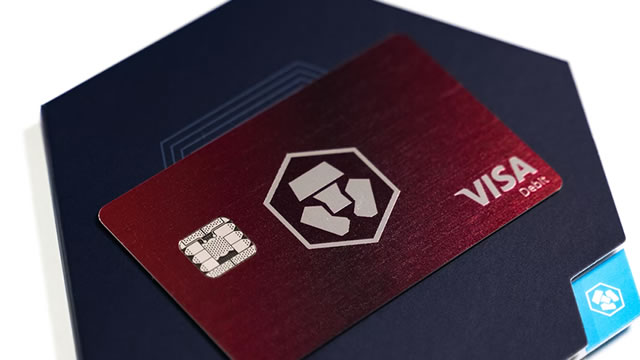
Profit gains have been the key contributor to Visa's stock performance in the past. As card payments continue to penetrate the global economy, the company's growth should continue.
TaoWeave (NASDAQ: TWAV - Get Free Report) and Visa (NYSE: V - Get Free Report) are both finance companies, but which is the better business? We will contrast the two businesses based on the strength of their valuation, dividends, earnings, analyst recommendations, profitability, institutional ownership and risk. Analyst Ratings This is a breakdown of recent ratings and

V's Q4 earnings beat and surging value-added services signal strength, but rising client incentives and a premium valuation cloud the case for buying now.
SAN FRANCISCO--(BUSINESS WIRE)--Visa (NYSE: V) today launched Visa Agentic Commerce Benchmark, a new benchmark for industry that puts leading AI models through realistic buying challenges—and is letting people take the test, too. Shopping is a difficult task for AI because consumers often do not clearly know what they want at the outset—for example, they may know they want a TV, but not all the required specifications. Under Visa's new benchmark, AI models are required to identify the needs of.