
Loading…
Loading…



That mutual fund you bought during the Clinton years has quietly been draining your returns for decades, and the gap between what you pay and what modern investors pay is almost certainly bigger than you realize.

The Vanguard Morningstar Total Stock Market ETF and the Schwab U.S. Broad Market ETF both feature a low 0.03% expense ratio. The Vanguard fund holds roughly 1,200 more stocks than the Schwab fund, providing deeper exposure to small-cap companies.

VTI's rock-bottom fee gets all the attention, but there's a second cost buried in the fund's structure that most investors never think to check before they buy.

Both ETFs offer identical, industry-leading expense ratios of 0.03%. The iShares Core S&P Total U.S. Stock Market ETF manages nearly $100 billion in assets and has a longer operational history than its Schwab counterpart.

Three total market index ETFs dominate the do-it-yourself investor's shortlist for whole-market US equity exposure: Vanguard Total Stock Market ETF (NYSEARCA:VTI), iShares Core S&P Total U.S.
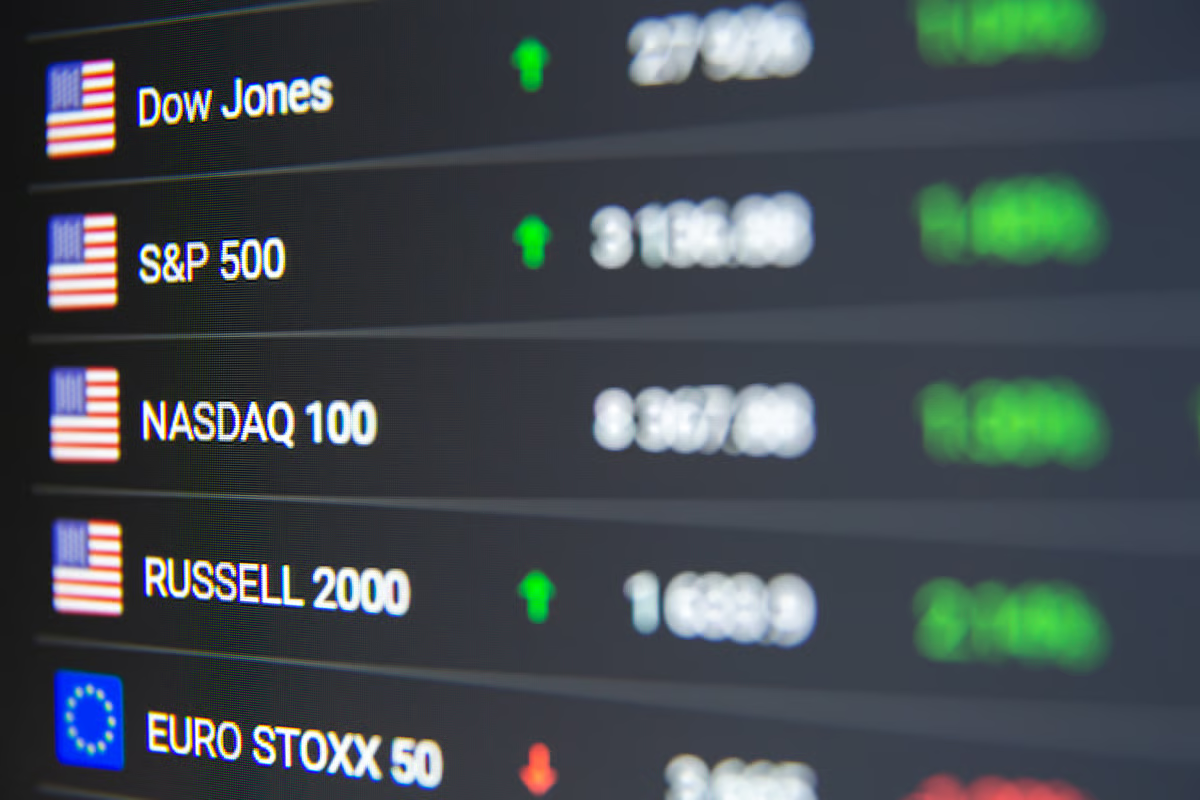
Instead of buying the 30 stocks of the Dow Jones Industrial Average, this ETF offers exposure to nearly 2,500 stocks.

Schwab US Broad Market ETF offers cost-efficient, diversified exposure to the entire U.S. equity market, eliminating single-stock risk. SCHB's performance is closely tied to technology sector momentum and AI-driven earnings, with the current tech allocation at 36.7%. With a 0.03% expense ratio and over 2,300 holdings, SCHB provides broad market participation but limits potential for significant outperformance.
Both funds charge 0.03% expense ratios and delivered similar 1-year returns, but differ in holdings count and five-year performance.