
Loading…
Loading…

See exactly how SCHA's revenue becomes profit — a Sankey that traces revenue (and its reported segments) through gross profit, operating expenses, and net profit, with the year-over-year change on every line.
The same diagram the Chart Builder draws, right on the Summary tab. Upgrade to unlock it for SCHA and 80,000+ other tickers.
The primary objective of this fund is to replicate, with the greatest possible precision and prior to the deduction of management fees and operational expenses, the comprehensive performance of the Dow Jones U.S. Small-Cap Total Stock Market Index.
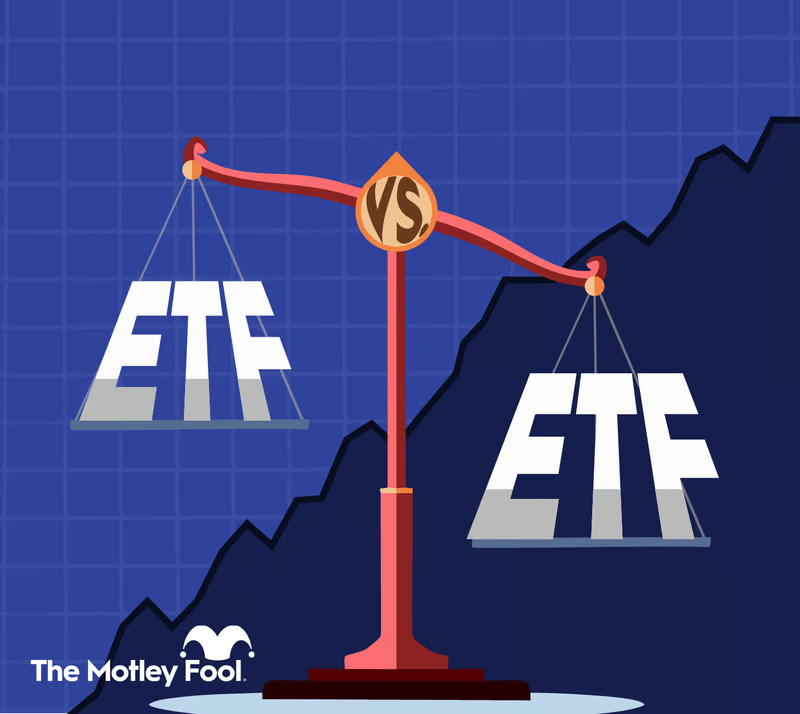
Both funds charge identical 0.03% expense ratios, but Vanguard holds significantly more assets and offers a higher dividend yield of 1.2%.

If you're interested in broad exposure to the Small Cap Blend segment of the US equity market, look no further than the Schwab U.S. Small-Cap ETF (SCHA), a passively managed exchange traded fund launched on November 3, 2009.
Avior Wealth Management LLC lessened its holdings in shares of Schwab US Small-Cap ETF (NYSEARCA:SCHA) by 31.0% in the second quarter, according to the company in its most recent disclosure with the Securities and Exchange Commission. The institutional investor owned 100,460 shares of the company's stock after selling 45,204 shares during the

Schwab U.S. Small-Cap ETF is rated BUY for broad, low-cost exposure to 1,731 small-cap U.S. companies, avoiding factor or sector bets. SCHA's 0.03% expense ratio and 11% turnover make it an efficient, long-term allocation for investors seeking to complement large-cap holdings. The recent 36.39% one-year return signals renewed interest in small caps, but SCHA's thesis centers on potential capital appreciation, not income.

The Schwab U.S. Small-Cap ETF (SCHA) manages significantly more assets and carries a lower expense ratio than iShares Morningstar Small-Cap ETF (ISCB). The Morningstar ETF provides a higher dividend yield but trailed in total returns over the last 12 months.