
Loading…
Loading…


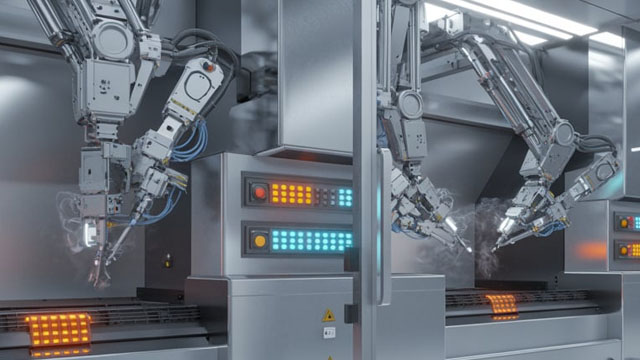
Last month we broke down the three key areas needed to build your own humanoid. We have already looked at the companies behind the technologies required to build a humanoid's brain.

If AI and robotics suddenly feel like they are moving faster, August gave investors plenty of evidence that the pace really is accelerating. We saw longer-running agents, faster and cheaper inference, AI systems reaching into laboratories and physical equipment, robots learning from fewer demonstrations, and new capital and infrastructure forming around commercial deployment.

NVIDIA's 70% growth outlook reinforces the AI boom, benefiting ETFs targeting generative AI, quantum computing, robotics and next-gen software.

For most of the history of industrial robotics, one sector ruled above all others. As recently as 15 years ago, the automotive industry accounted for 70% to 80% of all industrial robot demand, Morten Paulsen, head of research and managing director at CLSA Japan, said during a recent webcast.

In this day and age, turn on the TV and chances are you'll see something about AI or Robotics. These two topics are high on people's minds both as investment classes and as something that's becoming part of tangible reality in everyday lives.

ROBO Global Robotics and Automation Index ETF offers diversified, long-term exposure to the expanding robotics sector. Robotics adoption is accelerating across factories, warehouses, agriculture, healthcare, and notably military applications, driving substantial growth potential. Military robotics, exemplified by Ukraine and China, highlight strategic and economic inflection points for the industry.
The U.S. manufacturing sector is larger than most people realize, with 17% of world manufacturing value added – more than Japan, Germany, Korea, Italy, and France combined. Key Takeaways Recruitment and retention remain the top concern for U.S. manufacturers, with 481,000 job openings recorded in June alone.

I've often looked at the robotics movement as a “now-and-later” play, meaning that it's part of the global industrial complex today, defensive against AI disruption (net winner), and increasingly, not just a cyclical, but a new growth story. Robotics spending spans manufacturing, energy, mobility, healthcare, agriculture, construction, consumer applications and defense.