
Loading…
Loading…

NIB (iPath Bloomberg Cocoa Subindex Total Return(SM) ETN) is no longer actively trading.
This usually means the company was acquired and taken private, delisted from its exchange, or its ticker has been retired. Every price, valuation, dividend, and analyst figure on this page is frozen at the last available trading session and reads as historical reference — not a current-day signal.

NIB does not currently pay a dividend.
See exactly how NIB's revenue becomes profit — a Sankey that traces revenue (and its reported segments) through gross profit, operating expenses, and net profit, with the year-over-year change on every line.
The same diagram the Chart Builder draws, right on the Summary tab. Upgrade to unlock it for NIB and 80,000+ other tickers.
This ETN tracks the Dow Jones-UBS Cocoa Subindex Total Return (SM), an index designed to mirror the potential gains available from a direct, unleveraged investment in cocoa futures contracts. Currently, this specific index is composed exclusively of a single cocoa futures contract and is also a constituent part of the broader Dow Jones-UBS Commodity Index Total Return (SM).

EXCLUSIVE: Cocoa is on course to rise by 15% after hitting its highest level in over three months this week, though prices are unlikely to return to levels seen in 2025, analysts say.

HAUPPAUAGE, N.Y., Oct. 29, 2024 (GLOBE NEWSWIRE) -- AmpliTech Group, Inc. (Nasdaq: AMPG, AMPGW), a designer, developer, and manufacturer of state-of-the-art signal processing components for satellite, Public and Private 5G, and other communications networks, including the design of complete 5G/6G systems and a global distributor of packages and lids for integrated circuits assembly, today announced the release of its latest 5G Network In A Box (NIB) mobile product line.
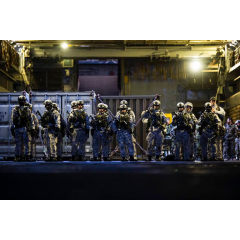
Key Points: Nordic governments are considering expanding the NIB’s mandate to include financing for defense companies, reflecting a shift in strategic priorities. The proposed move aims to leverage the “Nato-dividend” and strengthen regional defense collaboration. The decision to expand the NIB’s scope will require careful consideration of the types of defense investments, financial implications, and transparency mechanisms. Nordic Investment Bank Explores Defense Funding A shift in strategic priorities is underway in the Nordic region as governments explore expanding the Nordic Investment Bank (NIB) mandate to include financing for defense companies. This move, spurred by recent geopolitical changes and the increasing focus on national security, could significantly alter the bank’s operations and its role in supporting regional growth. Get alerts: A Change in Direction Established in 1975 by the five Nordic states, the NIB was initially conceived as a financial institution dedicated to fostering the growth of non-defense industries within the region and internationally. The addition of Estonia, Latvia, and Lithuania as full members in 2005 further solidified its focus on non-military sectors. However, the changing global security landscape has prompted a reassessment of the NIB’s role. As André Küüsvek, the NIB’s chief executive, points out, “The world has changed. The NIB hasn’t financed defense companies in the military-industry complex in the past.” This potential shift signifies a departure from the bank’s traditional focus and represents a bold move towards a more comprehensive approach to regional security. The “Nato-Dividend” and Defense Collaboration The Nordic nations, particularly Sweden and Norway, want to leverage the “Nato-dividend,” the benefit associated with their recent membership in the North Atlantic Treaty Organization (NATO), to strengthen defense capabilities and cooperation. The proposed inclusion of defense companies within the NIB’s portfolio aligns with this objective. This move follows growing defense collaboration within the region. In the first quarter of 2024, the Finnish Defense Forces (FDF) initiated a project to transfer military equipment to storage facilities in Norway. Similar operations are planned for Sweden in the coming months, demonstrating a tangible commitment to coordinated defense efforts. Infrastructure, Green Energy, and Security While the NIB’s traditional focus on infrastructure and green energy projects remains a priority, the potential inclusion of defense funding presents a complex balancing act. The bank’s expertise in financing projects related to wind and hydropower, hydrogen-fueled transportation, and sustainable buildings will need to be harmonized with its potential new role in supporting the growth of defense technologies. “We want to strike a balance between our existing activities and the additional field of national and regional security,” stated a spokesperson for the Nordic governments, reflecting the delicate negotiation process underway. Key Issues and Considerations The expansion of the NIB’s scope to include defense funding raises several key questions: Types of Defense Investments: The Nordic governments are debating the specific types of defense-related capital investments eligible for NIB financing. This includes defining the range of acceptable technologies and projects, from advanced weaponry to surveillance systems and cyber defense capabilities. Financial Implications: The proposed expansion would require carefully assessing the potential economic impact on the NIB’s operations and its existing funding commitments. The bank’s current lending activities, which include substantial support for research and development, would need to be integrated with the new defense portfolio. Transparency and Oversight: The decision to expand the NIB’s mandate to include defense funding will likely be scrutinized by stakeholders concerned with transparency and accountability. Robust mechanisms will need to be established to ensure the responsible and ethical allocation of resources within this sensitive sector. The final decision regarding the NIB’s expanded role in defense financing rests with the bank’s government owners. A detailed analysis of the potential benefits, risks, and financial implications is crucial to inform this decision. The Nordic region’s strategic interests will be central to this ongoing debate, particularly in light of current global security challenges.
El Nino and climate change are causing frequent extreme weather events, hurting cocoa crop production. This has boosted the price of cocoa and the related ETF.

El Nino, a recurring weather phenomenon characterized by an abnormal warming of the Pacific Ocean, has been a topic of interest this year.