
Loading…
Loading…


See exactly how MOTO's revenue becomes profit — a Sankey that traces revenue (and its reported segments) through gross profit, operating expenses, and net profit, with the year-over-year change on every line.
The same diagram the Chart Builder draws, right on the Summary tab. Upgrade to unlock it for MOTO and 80,000+ other tickers.
MOTO focuses on companies who apply modern technologies and business practices in development and production of transportation. The objective is to produce results for safer, cleaner, or connected transportation, transportation as a service or overall smart transportation. Companies must have more than 50% of their assets or revenues derived from these smart transportation objectives. MOTO also invests in technology companies whose products or services are used in transportation. Such companies may be involved in software, hardware or autonomous vehicle development. The fund is actively…

Transportation ETFs like HAIL capture attention as AI-driven logistics, automation and smart mobility fuel a stronger run for the transportation sector.

As an ex-future mobility research analyst, I spent a lot of time looking at financial statements and there was very little to see. New entrants in the space had no revenues (and if they had revenues then they had no profitability) and there was very little proof that they would hit their targets.
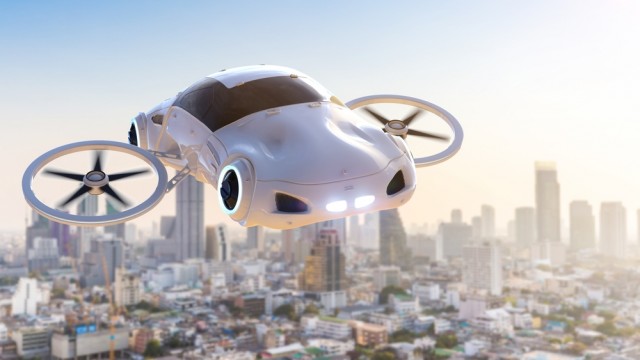
I have been dreaming about flying cars since I was a child, watching the cartoon “The Jetsons.” For those old enough to remember, the Jetsons were the cartoon family of the future, and they owned a flying car.
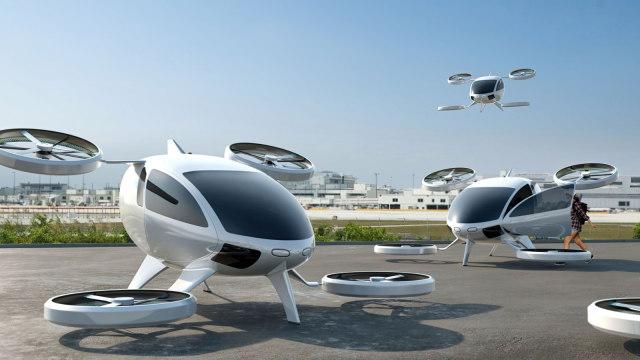
Cars could soon take to the skies, creating a potential $3.8 billion market by 2035 for some of the world's top flying car stocks. By 2040, we could be looking at a massive $1.5 trillion market, even $2.9 trillion, according to Morgan Stanley.
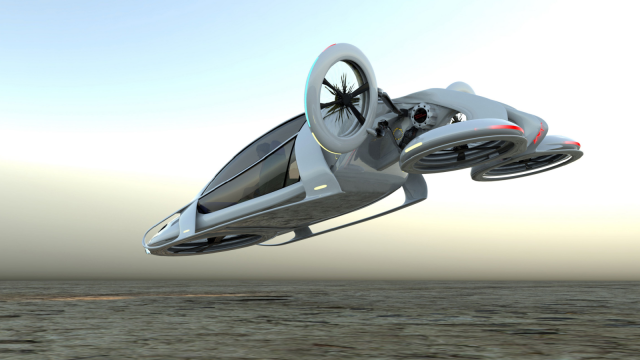
“Mark my words: a combination airplane and motorcar is coming,” said Henry Ford. While Ford was ridiculed for the idea 83 years ago, no one's laughing anymore.