
Loading…
Loading…

DMRS (DeltaShares S&P 600 Managed Risk ETF) is no longer actively trading.
This usually means the company was acquired and taken private, delisted from its exchange, or its ticker has been retired. Every price, valuation, dividend, and analyst figure on this page is frozen at the last available trading session and reads as historical reference — not a current-day signal.

See exactly how DMRS's revenue becomes profit — a Sankey that traces revenue (and its reported segments) through gross profit, operating expenses, and net profit, with the year-over-year change on every line.
The same diagram the Chart Builder draws, right on the Summary tab. Upgrade to unlock it for DMRS and 80,000+ other tickers.
Under typical market circumstances, the DeltaShares S&P 600 Managed Risk ETF (DMRS) is designed to commit a minimum of 80% of its holdings, not including any collateral from securities lending, to instruments that comprise the S&P 600 Managed Risk 2.0 Index. This foundational index endeavors to manage risk by dynamically allocating its weighting across three specific benchmarks: the S&P SmallCap 600 Index, the S&P U.S. Treasury Bond Current 5-Year Index, and the S&P U.S. Treasury Bill 0-3 Month Index. It's important to note that this fund operates as a non-diversified investment vehicle.

As a historic and unforgettable 2020 nears an end, what have we learned to better-position portfolios as we enter 2021? In the upcoming webcast, Where We Stand: 2021 Market Outlook, Tom Wald, Chief Investment Officer, Transamerica Asset Management, will explore the immediate opportunities and challenges ahead, including the impacts of the political climate, finding income, [.

My last article discussed Transamerica's LargeCap risk-managed ETF. They also launched ones for other asset classes. I will cover those now. While all investors have some level of risk aversion, as a retired investor, the desire to control risk has led me to explore funds designed to minimize that aspect of one's portfolio.

Led by Fama-French and the quant community, Wall Street has long considered small caps to be a significant factor in and of itself.
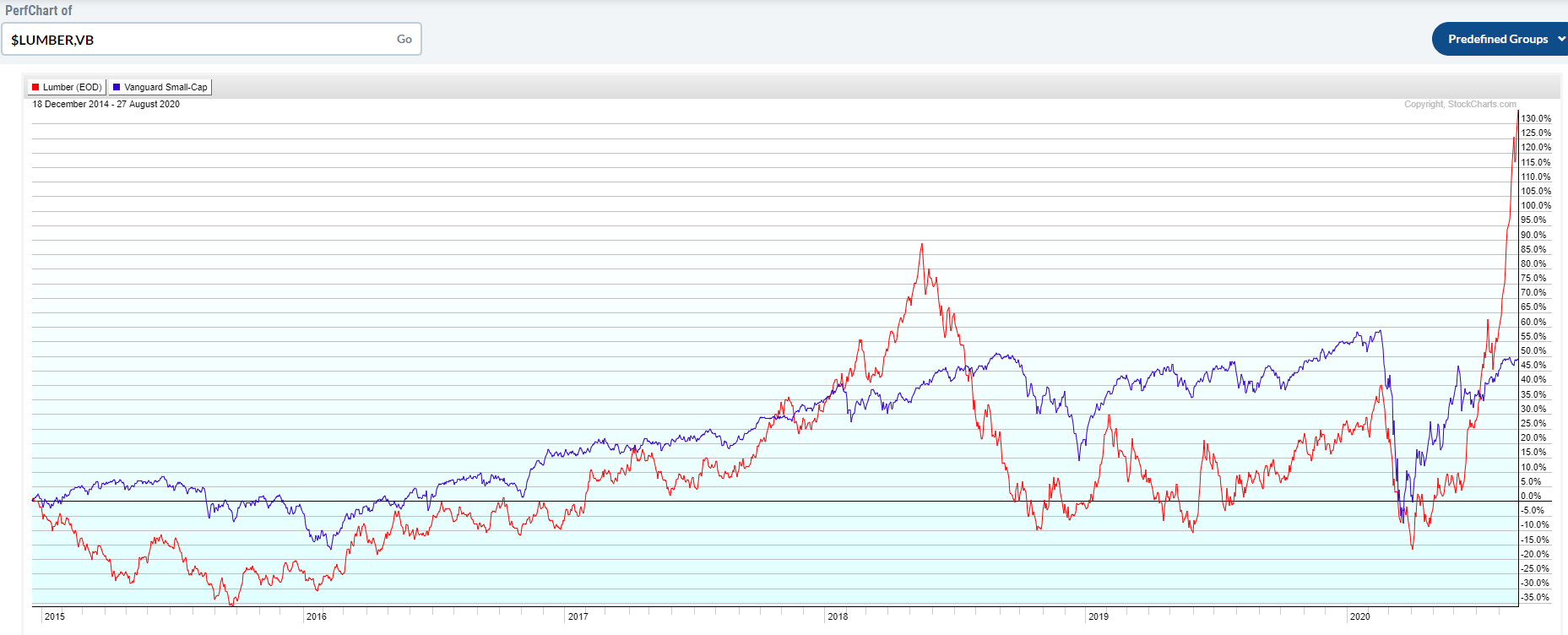
Lumber is screaming that small caps should be outperforming, consistent with my 2015 NAAIM award white paper.

In each of the past three calendar years, small cap stocks in the U.S. have lagged their large cap counterparts by roughly 6-7% per year. On a strategic basis,