
Loading…
Loading…


See price against where its own fundamentals say it should trade — the shaded gap is the discount or premium, across five valuation lenses.
Click below to see what's inside, then upgrade to unlock for DFKCY and 80,000+ other tickers.
See exactly how DFKCY's revenue becomes profit — a Sankey that traces revenue (and its reported segments) through gross profit, operating expenses, and net profit, with the year-over-year change on every line.
The same diagram the Chart Builder draws, right on the Summary tab. Upgrade to unlock it for DFKCY and 80,000+ other tickers.
Headquartered in Osaka, Japan, Daifuku Co., Ltd. delivers comprehensive global solutions for logistics and material handling. Their services encompass the full lifecycle, from initial consultation, engineering, and design through manufacturing, installation, and after-sales support for advanced automated systems. These systems, including automated warehousing, diverse storage and transport mechanisms, and sorting and picking technologies, serve a broad range of clients. This includes distributors in e-commerce, retail, wholesale, transportation, and warehousing, as well as manufacturers in…
Midway Through The Robotics Earnings Season: Discipline Rewarded, Recovery Broadening

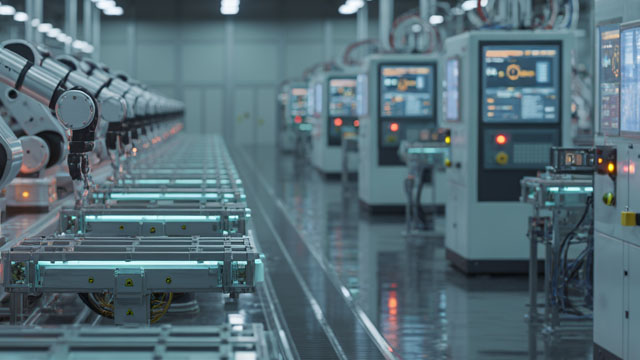
Daifuku's share price surged more than 25% after December results, and has outperformed other logistics automation peers on an improving order and margin outlook. FY'24 saw 6% revenue growth, with strong performance in clean room and airport automation helping to offset weakness in intralogistics. FY'25 projections call for a significant rebound in intralogistics orders and ongoing strength in clean room orders, helped by growing interest in Daifuku's back-end solutions.
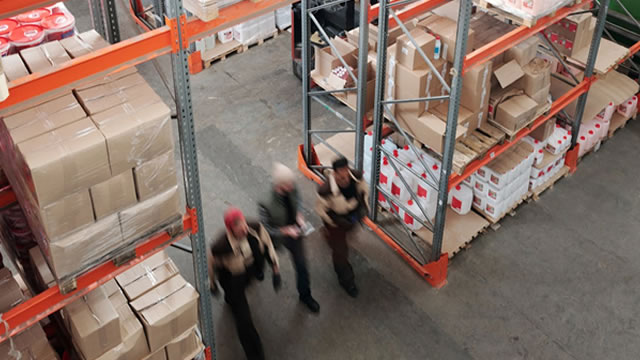
Despite ongoing pressure from weaker warehouse capex spending, Daifuku Co., Ltd. delivered 8% revenue growth and 100% operating income growth on strong cleanroom and airport demand and improved price/cost. Orders from electronics and retail markets improved, but auto declined; warehouse demand is likely to remain muted, and I see risks to auto demand, but semiconductor demand should remain healthy. Warehouse/logistics automation demand has proven more cyclical than previously expected, but automation penetration remains low and automation remains a key strategy to improve efficiency and offset longer-term labor challenges.