
Loading…
Loading…


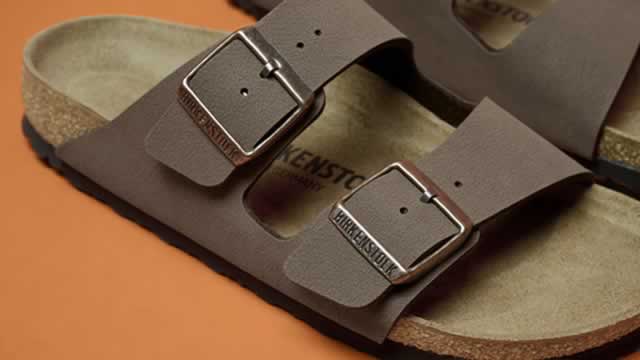
Sales keep rising, the company just raised its outlook, and a well-known contrarian investor has disclosed a sizable stake. Yet the stock has slid this year and is hovering just above its lows.

Birkenstock is rated 'Strong Buy' with a 21% upside to €36.5 per share, driven by robust brand equity and growth prospects. Scaling closed-toe silhouettes and expanding in Asia, particularly China, are central to BIRK's growth thesis and future outperformance. Q3 results showed 13% YoY revenue growth, strong D2C momentum, and APAC outperformance, with management raising full-year guidance.

Birkenstock Holding PLC (NYSE: BIRK - Get Free Report) was the recipient of some unusual options trading activity on Thursday. Stock investors purchased 8,849 call options on the company. This is an increase of approximately 127% compared to the average daily volume of 3,892 call options. Analyst Ratings Changes A number of equities analysts recently commented

Birkenstock is undervalued, trading at a 13.44x P/E despite delivering sector-leading growth and profitability. I see significant upside from APAC expansion and closed-toe footwear, with management targeting 13–15% annual revenue growth through FY2028. BIRK's business model emphasizes functional comfort over fashion, driving strong customer loyalty and repeat purchases.

Famed ‘Big Short' investor Michael Burry has revealed a fresh round of portfolio changes, expanding bearish bets against several artificial intelligence and semiconductor-linked stocks.

Birkenstock Holding PLC (NYSE: BIRK - Get Free Report) has been assigned a consensus recommendation of "Moderate Buy" from the nineteen ratings firms that are presently covering the stock, Marketbeat reports. Six equities research analysts have rated the stock with a hold rating and thirteen have assigned a buy rating to the company. The average 1

Ralph Lauren (NYSE: RL - Get Free Report) and Birkenstock (NYSE: BIRK - Get Free Report) are both consumer discretionary companies, but which is the superior stock? We will compare the two businesses based on the strength of their earnings, analyst recommendations, institutional ownership, dividends, risk, valuation and profitability. Analyst Ratings This is a summary of current

Luxury brands must find a delicate balance between continuing to cultivate an air of exclusivity, maintaining perceived quality even in spite of higher materials costs and inflation, and balancing price increases against customer tolerance. While retail more broadly has faced numerous challenges as consumers have tightened their belts, some high-end luxury brands have largely avoided these pitfalls.