
Loading…
Loading…


See exactly how APUE's revenue becomes profit — a Sankey that traces revenue (and its reported segments) through gross profit, operating expenses, and net profit, with the year-over-year change on every line.
The same diagram the Chart Builder draws, right on the Summary tab. Upgrade to unlock it for APUE and 80,000+ other tickers.
This actively managed exchange-traded fund (ETF) employs a hybrid investment approach, strategically blending active and passive methodologies. Its primary goal is to optimize expenses, enhance benchmark alignment, and maximize potential returns relative to its benchmark, the CRSP U.S. Total Market Index. Typically, under normal market circumstances, the fund allocates a minimum of 80% of its net assets (including any capital borrowed for investment) to U.S. equity securities that are constituents of the aforementioned index.
ActivePassive U.S. Equity ETF (NYSEARCA:APUE - Get Free Report) shares saw unusually-high trading volume on Friday. Approximately 100,814 shares traded hands during mid-day trading, an increase of 3% from the previous session's volume of 97,944 shares.The stock last traded at $42.2740 and had previously closed at $42.06. ActivePassive U.S. Equity ETF Trading Down 0.0%

ActivePassive U.S. Equity ETF (NYSEARCA:APUE - Get Free Report) shares saw strong trading volume on Friday. 123,237 shares traded hands during mid-day trading, an increase of 39% from the previous session's volume of 88,587 shares.The stock last traded at $42.3330 and had previously closed at $42.20. ActivePassive U.S. Equity ETF Trading Up 0.5% The

APUE blends active and passive management in a broad stock market universe. Fundamental metrics are slightly better than those of the benchmark, but performance is almost identical. The track record of APUE is too short to assess its strategy, but for now, it looks average compared to competitors charging lower fees.
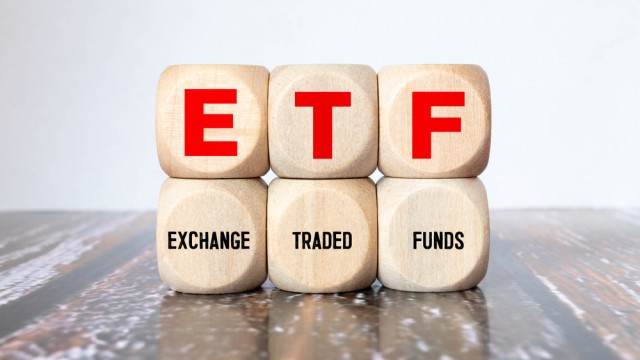
The active and passive ETF divide has become more and more important in the investing landscape. With ETFs slowly but surely eating away at mutual funds' popularity, save for retirement funds, the cleavage between active and passive strategies has taken on a bigger role.