
Loading…
Loading…



A standard advisory fee sounds small until you stack it against what your bonds actually earn and realize how much income quietly disappears every year. Three low-cost ETFs expose just how lopsided that arrangement has become.

Engineers Gate Manager LP purchased a new position in Vanguard Intermediate-Term Corporate Bond ETF (NASDAQ: VCIT) during the undefined quarter, according to the company in its most recent 13F filing with the Securities and Exchange Commission (SEC). The fund purchased 15,407 shares of the company's stock, valued at approximately $1,273,000. Other hedge funds

Aon's $13.5B bond sale for its $17B USI acquisition draws about $65B in orders, tightening pricing despite higher borrowing costs and a difficult market.

HB Wealth Management LLC raised its holdings in shares of Vanguard Intermediate-Term Corporate Bond ETF (NASDAQ: VCIT) by 242.9% in the undefined quarter, according to its most recent 13F filing with the Securities and Exchange Commission. The institutional investor owned 30,777 shares of the company's stock after acquiring an additional 21,801 shares during
Vanguard Intermediate-Term Corporate Bond Index Fund ETF is rated Buy as the optimal balance of yield and risk among US investment-grade corporate bond ETFs. VCIT offers a 4.8% yield, 5.1% YTM, and a 6-year duration, providing a compelling risk-return profile compared to VCSH and VCLT. VCSH is preferable when rates are expected to rise, while VCLT is favored if rates are set to fall; VCIT remains the middle-ground choice.
Vanguard Intermediate-Term Corporate Bond ETF features a significantly lower expense ratio of 0.03% compared to 0.36% for the Fidelity fund. Fidelity Investment Grade Bond ETF has experienced a smaller maximum drawdown and lower beta, suggesting a more conservative risk profile.
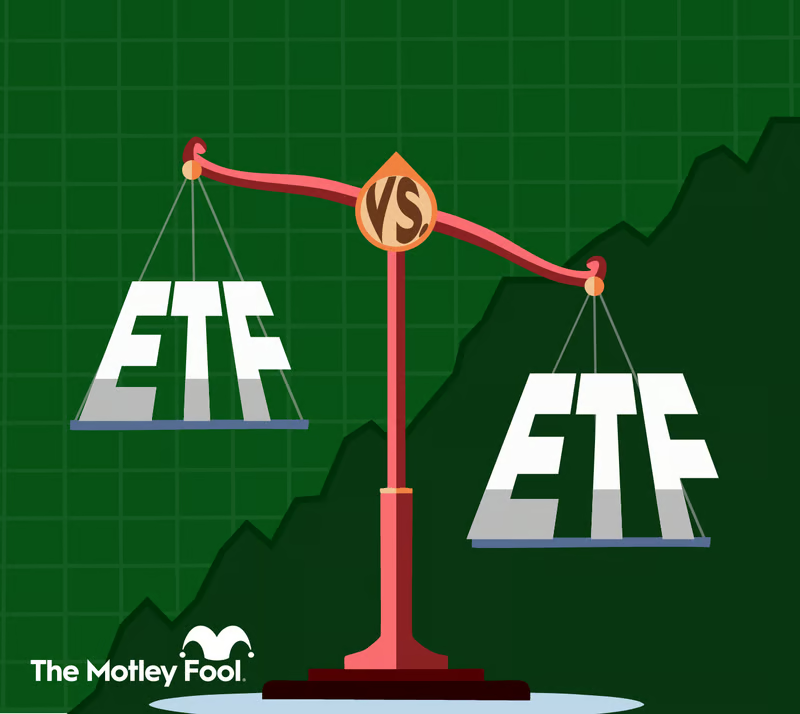
Both funds hold 2,000+ investment-grade bonds with matching 4.9% yields and virtually identical five-year returns. Vanguard edges ahead with a lower 0.03% expense ratio.
Vanguard Intermediate-Term Corporate Bond ETF offers a significantly lower 0.03% expense ratio and a higher dividend yield through its exposure to investment-grade corporate credit. iShares 3-7 Year Treasury Bond ETF provides a more conservative risk profile with lower volatility and a shallower 13.90% maximum drawdown.