
Loading…
Loading…



At the 24% federal bracket, a $500,000 position in a broad international equity exchange-traded fund (ETF) offering roughly 3% in annual distributions sends about $1,800 a year to the IRS at qualified rates, and closer to $3,600 if any portion is taxed as ordinary income.
The Schwab International Equity ETF (SCHF) offers a lower expense ratio of 0.03% compared to 0.06% for the Vanguard Total World Stock ETF (VT). VT provides broader diversification with more than 10,000 holdings, including U.S. and emerging market stocks.

Schwab International Equity ETF remains a BUY, offering diversified ex-US exposure with a competitive 0.03% expense ratio and 3.1% dividend yield. SCHF's recent 12-month rally (+40.31%) was driven by valuation rerating, but forward EPS growth expectations (31%) support continued upside. Market-cap weighting and inclusion of South Korea and Canada enhance SCHF's sector balance and performance versus peers like IEFA.
Schwab International Equity ETF features a significantly lower expense ratio and higher dividend yield than iShares MSCI World ETF. iShares MSCI World ETF includes heavy exposure to U.S. technology giants while Schwab International Equity ETF focuses exclusively on developed markets outside the United States.

The developed market rate-hiking club is getting bigger, as the European Central Bank on Thursday joined counterparts in Australia, Norway and Japan in tightening monetary policy, while more central banks are set to follow in the coming months.

Despite continued concentration in mega-cap technology stocks, US dividend-focused strategies have generally remained competitive and historically experienced more shallow drawdowns than broader equity markets. Last year, US companies paid a record US$704.8 billion in dividends - the 15th consecutive annual record. Concurrently, dividend growth accelerated across several international markets, highlighting the continued strength of shareholder-return trends.
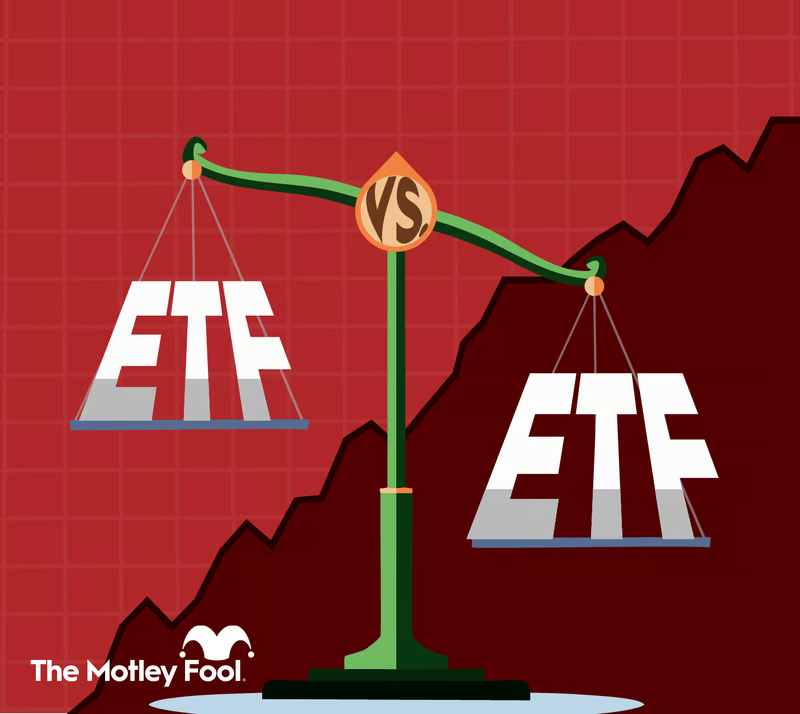
Explore how portfolio size and sector focus set these international ETFs apart for global diversification seekers.

Easing geopolitical tensions, a softer dollar and improving risk appetite are reviving interest in global equity ETFs.