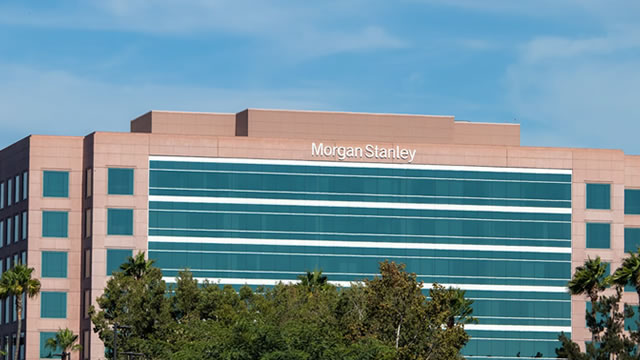
- What does MS invest in?
- Morgan Stanley operates as a prominent financial holding company, delivering a comprehensive suite of financial solutions and services. Its diverse clientele spans major corporations, governmental bodies, financial institutions, and individual clients across various global regions, including the Americas, Europe, the Middle East, Africa, and Asia. The firm's operations are structured into three primary divisions: Institutional Securities, Wealth Management, and Investment Management. Within the Institutional Securities segment, Morgan Stanley provides crucial capital-raising and strategic financial advisory services. This includes underwriting activities for debt, equity, and other financial instruments, alongside expert counsel on mergers and acquisitions, corporate reorganizations, real estate transactions, and project financing. Furthermore, this division is a key player in sales and trading, offering services like sales execution, financing solutions, prime brokerage, and market-making across equity and fixed-income products, encompassing foreign exchange and commodities. It also extends corporate and commercial real estate loans, furnishes secured lending facilities, supports sales and trading clients with financing, and engages in asset-backed and mortgage lending. Investment and research services, along with specific wealth management offerings, are also part of this segment. The Wealth Management segment caters to individual investors, as well as small to medium-sized enterprises and institutions. It offers a broad spectrum of services, from financial advisor-led and self-directed brokerage and investment guidance to comprehensive financial and wealth planning. This segment also delivers workplace solutions, such as stock plan administration, and provides annuity and insurance products. Lending options include securities-backed loans, residential real estate mortgages, and other credit facilities, complemented by banking and retirement plan services. Finally, the Investment Management segment is dedicated to providing specialized investment products, including equity, fixed income, liquidity, and alternative strategies. These offerings are distributed through institutional and intermediary channels to a sophisticated client base that features benefit and defined contribution plans, foundations, endowments, governmental entities, sovereign wealth funds, insurance companies, and corporate and third-party fund sponsors. Morgan Stanley's origins trace back to its founding in 1924, and its global headquarters are situated in New York, New York.
- What is the expense ratio of MS?
- An expense ratio for Morgan Stanley (MS) is not available from our data sources — neither our market-data feed nor the SEC's structured prospectus and annual-report datasets report one for this share class. The fund's prospectus on the issuer's site carries the authoritative fee.
- How big is MS?
- Morgan Stanley (MS) manages $319.41B in total assets. AUM determines bid-ask liquidity and the fund's vulnerability to closure — funds below ~$50M are at higher risk of liquidation.
- Is MS actively managed or an index fund?
- MS's management style is described in the fund's prospectus. See the description on the Summary tab for the published strategy.
- When was MS launched?
- Morgan Stanley (MS) launched in February 1993 and is managed by Morgan Stanley.
- How has MS performed?
- MS's total return — price change plus reinvested distributions — is charted at the top of this page. Switch the price chart to Total Return and pick a 1-year, 3-year, 5-year, or 10-year window to read the compound annual growth rate (CAGR) over each horizon.