
Loading…
Loading…


The NYLI Candriam U.S. Large Cap Equity ETF (IQSU) endeavors to mirror the financial outcomes, encompassing both capital appreciation and dividend income, of the NYLI Candriam U.S. Large Cap Equity Index, before any management fees or operating costs are applied. This exchange-traded fund's underlying index is strategically built to offer investment exposure to shares of prominent and mid-sized American corporations. These companies are meticulously chosen based on their adherence to specific Environmental, Social, and Corporate Governance (ESG) criteria, a framework originally formulated by Candriam.
Is IQSU's expense ratio expensive, average, or a steal for its category?
Pro reveals the verdict on a 5-tier spectrum calibrated against ICI 2025 industry averages, with strategy-aware bands so the comparison is meaningful.
NYLI Candriam U.S. Large Cap Equity ETF implements an environmental, social, and corporate governance (“ESG”) strategy focused on large companies. IQSU is heavily invested in technology, with Microsoft and Apple each representing nearly 10% of assets, and has 284 holdings. The purpose of ESG funds is offering an ethical alternative without sacrificing performance. In this matter, IQSU has done a good job.

On this episode of ETF Prime, VettaFi's Stacey Morris offered a quarterly update on the energy sector and energy ETFs with host Nate Geraci. Candriam's Alexandra Russo later joined Geraci to discuss ESG investing mishaps and opportunities.

There's no sugarcoating it. Last year was unkind to many traditional environmental, social, and governance (ESG) exchange traded funds.
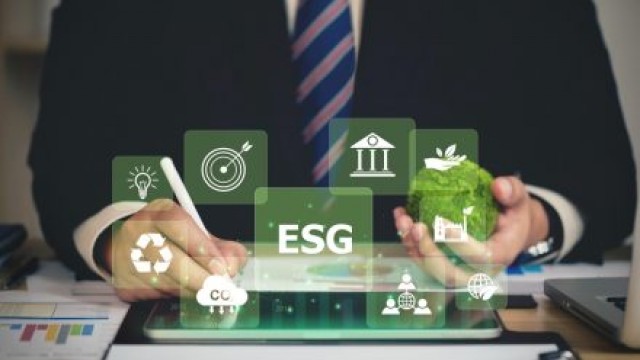
Last year was an interesting one regarding how market participants view environmental, social, and governance (ESG). Those that oppose that style seemingly grew more strident in that opposition while ESG supporters displayed continuing devotion.
Advisors and experienced investors know that when it comes to index funds and passively managed exchange traded funds, understanding the underlying index's methodology is a critical element in charting outcomes. That's particularly true in the world of environmental, social, and governance (ESG) investing where indexes and funds are sprouting up at a rapid pace.