
Loading…
Loading…


The First Trust Nasdaq Semiconductor ETF operates as an exchange-traded fund with the primary goal of broadly matching the capital appreciation and income stream generated by the Nasdaq US Smart Semiconductor Index. This performance alignment is sought prior to the deduction of the fund's internal fees and expenses. To accomplish this, the ETF endeavors to precisely mirror the individual securities and their respective allocations within the Nasdaq US Smart Semiconductor Index, aiming for a performance correlation of at least 95% with its benchmark.
Is FTXL's expense ratio expensive, average, or a steal for its category?
Pro reveals the verdict on a 5-tier spectrum calibrated against ICI 2025 industry averages, with strategy-aware bands so the comparison is meaningful.

If you're interested in broad exposure to the Technology - Semiconductors segment of the equity market, look no further than the First Trust NASDAQ Semiconductor ETF (FTXL), a passively managed exchange traded fund launched on September 20, 2016.

First Trust Nasdaq Semiconductor ETF employs a sort of smart beta approach, emphasizing quality and momentum over market-cap weighting. FTXL currently overweights Intel and Micron, driving recent outperformance but also increasing portfolio concentration. FTXL's methodology has delivered benefits over 3 years, with strong sector EPS and revenue growth forecasts supporting a positive outlook.
The First Trust Nasdaq Semiconductor ETF might be the most underrated chipmaker ETF on the market. The ETF has returned some 161% over the past 12 months.

Semiconductor ETFs came under pressure Tuesday as a sharp sell-off in South Korea's technology sector spilled over into U.S. chip stocks, raising concerns about the durability of the artificial intelligence-driven rally ahead of a closely watched earnings report from Micron Technology Inc (NASDAQ:MU).
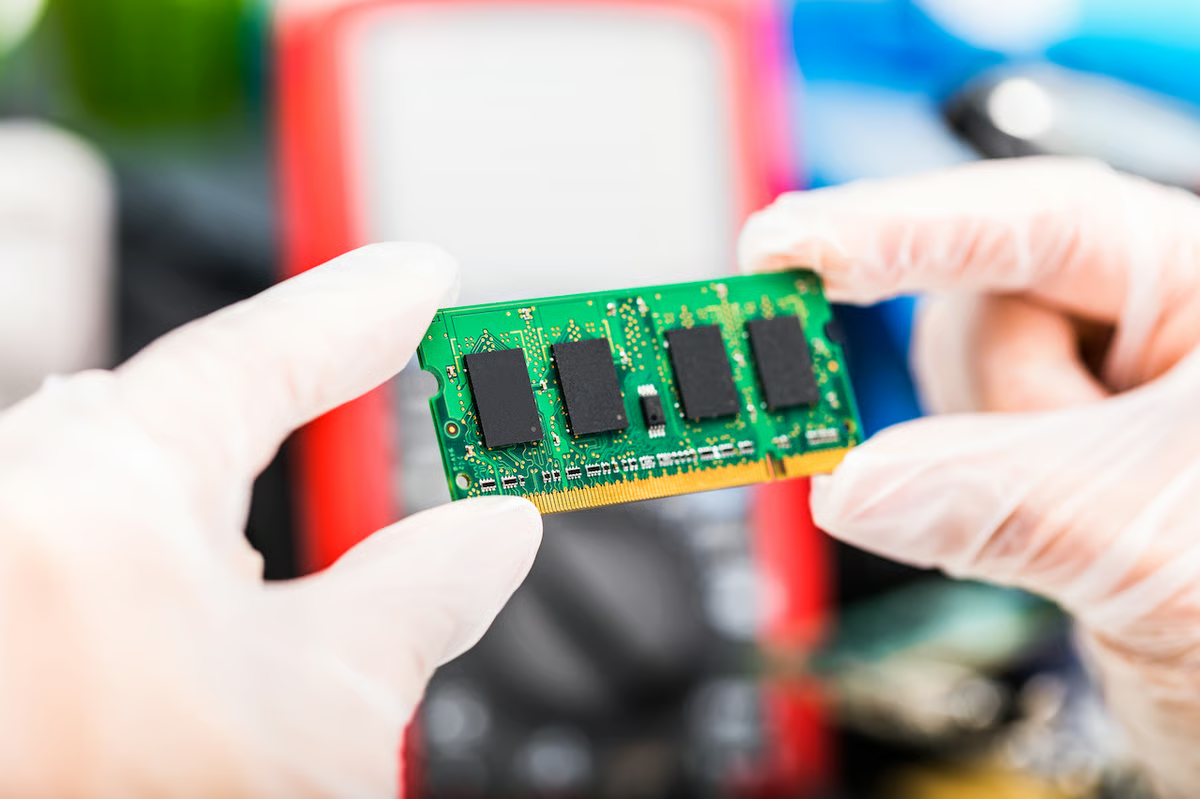
The First Trust Nasdaq Semiconductor ETF does things differently than standard semiconductor ETFs, positioning it as a beneficiary of Micron's surge.