
Loading…
Loading…



Saudi Arabia is officially opening its capital markets more broadly to foreign investors. Effective February 1, 2026, foreign individuals and institutions will be able to participate directly in the Main Market (Tadawul) without needing to qualify under a special investor regime.

Recommend buying Saudi-focused ETFs like iShares MSCI Saudi Arabia and Franklin FTSE Saudi Arabia to capitalize on economic diversification. KSA and FLSA offer exposure to sectors beyond oil, including financials, technology, and infrastructure, with FLSA having a lower expense ratio. Saudi Arabia's Vision2030 plan drives rapid non-oil sector growth, supported by large-scale projects and increased foreign investment.

Saudi equities, while still down this year, have underperformed emerging markets and outperformed global markets. We examine how FLSA, a little-known ETF that covers Saudi equities, stacks up against its larger peer- KSA, and find that the former, while hardly flawless, does pretty well. Saudi's prospects are still heavily reliant on oil, and conditions here don't look too alluring.

On January 10, 2024, the U.S. Department of Labor released its final rule on employee or independent contractor classification under the Fair Labor Standards Act (FLSA). Effective March 11, 2024, the rule implements a six-factor test aligning with judicial precedent, returning to a totality-of-the-circumstances analysis of “economic realities” for worker status determination.

The Gulf Cooperation Council area has so far withstood global challenges, with year-on-year GDP growth accelerating to 6.9% in 2022, driven by high oil prices and stronger growth rates in non-oil sectors. Inflation rates in the Gulf Cooperation Council countries remain below the regional and global levels and are subsiding faster, expected to average about 2.7% in 2023, down from 3.2% in 2022.

The broader emerging markets were hurt badly mainly due to pain in Chinese equities and the strength in the greenback.
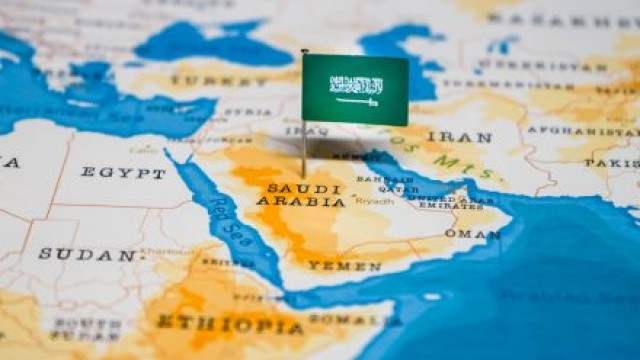
Saudi Arabia and its national oil producer are benefitting from surging oil prices. The country reported a budget surplus of $15.3 billion in Q1 as government officials curbed spending amidst flowing oil income.

Emerging market (EM) ETF investing is currently in a tight spot due to the dollar strength, rising rates in the United States, capital outflows, a slump in China's economy, rising inflation and a debacle in Russia investing.