
Loading…
Loading…



It's the year of foreign equities ETF diversification and performance. For many ETF issuers, their international or ex-U.S. ETF strategies have led their suites for performance amid rising domestic risks.

The Franklin FTSE Latin America ETF (FLLA) which focuses on 140 stocks from Latin America has generated returns of double-digits and outperformed global stocks this year. We ascertain how FLLA is positioned relative to its larger peer ILF. The growth landscape in Brazil looks weak with benchmark interest rates poised to rise even further.

China and Hong Kong markets had a humbling 2023 with equities down more than 10%. Beijing has also begun stepping up tourism and travel promotions, granting visa-free entry to 11 countries, with Singapore and Thailand the latest to be included.

Bull vs. Bear is a weekly feature where the VettaFi writers' room takes opposite sides for a debate on controversial stocks, strategies, or market ideas — with plenty of discussion of ETF ideas to play either angle. For this edition of Bull vs.

Another week has gone, and it's foreign equities that led in the week's top-performing ETFs. Investors looked abroad to both commodities centers and events like Turkey's election in their ETFs.
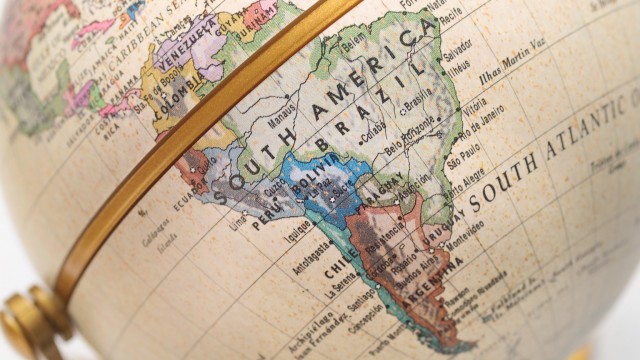
The Franklin FTSE Latin America ETF is an index-based ETF that invests in the Latin America and Caribbean region of the Western Hemisphere (sort of). Investment selection is based on the FTSE Latin America RIC Capped Index. Despite the name, 90% of the assets are in two countries: Brazil and Mexico.

The latest inflation news in the U.S. may have investors looking elsewhere, with international and emerging markets equities an early bright spot in 2023. One area that has picked up interest in the foreign equities space has been Latin America, poised to feed a reopening Chinese economy with commodities.
The MSCI Latin America Index has performed better than the MSCI Emerging Market Index cumulatively over the past 5 and 7 years as well as over longer time periods, buoyed by its natural resource companies. The region is well placed to take advantage of the opportunities created by the renewable energy revolution with 54% of global lithium reserves concentrated there.