
Loading…
Loading…

EEMD (AAM S&P Emerging Markets High Dividend Value ETF) is no longer actively trading.
This usually means the fund has been liquidated, merged into another product, or its ticker has been retired. Every price, valuation, dividend, and analyst figure on this page is frozen at the last available trading session and reads as historical reference — not a current-day signal.

The index is a rules-based, equal-weighted index that is designed to provide exposure to the constituents of the S&P Emerging Plus LargeMidCap Index that exhibit both high dividend yield and sustainable dividend distribution characteristics, while maintaining diversified sector exposure. At least 80% of the fund’s net assets will be invested in equity securities that (i) are tied economically to Emerging Markets countries and (ii) have had a positive realized annual dividend yield within the past year.
Is EEMD's expense ratio expensive, average, or a steal for its category?
Pro reveals the verdict on a 5-tier spectrum calibrated against ICI 2025 industry averages, with strategy-aware bands so the comparison is meaningful.

Global dividends hit a record high in 2024, with $606.1 billion paid in Q2 alone, as tech giants like Meta and Alibaba entered the dividend-paying market. Equity yields remain low compared to bonds, with the FTSE All-World index yielding 1.86% in September 2024, while the FTSE World Government Bond index yield to maturity stood at 3.03%. Dividend-focused strategies can enhance income potential in equity portfolios by prioritising high-dividend-paying sectors and reducing risks of dividend cuts.
Dividend stocks, including REITs and utilities, have underperformed in recent years. Rising interest rates and increasing costs of capital have contributed to the underperformance. The beginnings of a strong dividend stock rally may have just begun on the back of some very good news.

Investing in dividend-paying stocks has proved to be a helpful strategy, outperforming global markets over the long term. Dividend income strategies play an important role for multi-asset income portfolios. But they can also run the risk of being too narrowly focused, which can limit both income potential and upside participation when equity markets rise.

Past experience shows us that emerging markets have historically reacted positively to higher global rates, especially if the latter reflects an improving global growth outlook. Most emerging markets will start normalizing rates well before the U.S. and developed markets.
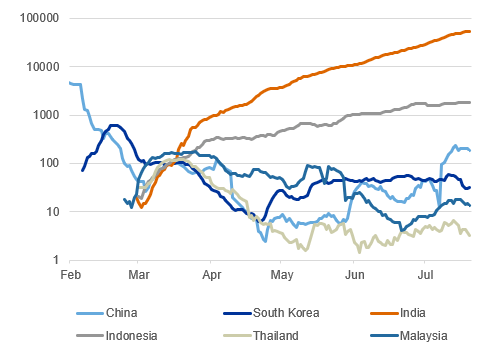
Today, China's economic recovery continues ticking along, and we are even seeing some indicators showing growth relative to last year.