
Loading…
Loading…

DMRS (DeltaShares S&P 600 Managed Risk ETF) is no longer actively trading.
This usually means the fund has been liquidated, merged into another product, or its ticker has been retired. Every price, valuation, dividend, and analyst figure on this page is frozen at the last available trading session and reads as historical reference — not a current-day signal.

Under normal market conditions, the fund invests a substantial portion, but at least 80%, of its assets, exclusive of collateral held from securities lending, in securities comprising the S&P 600 Managed Risk 2.0 Index. The underlying index seeks to achieve these objectives by allocating weightings among the S&P SmallCap 600 Index, the S&P U.S. Treasury Bond Current 5-Year Index and the S&P U.S. Treasury Bill 0-3 Month Index. The fund is non-diversified.
Is DMRS's expense ratio expensive, average, or a steal for its category?
Pro reveals the verdict on a 5-tier spectrum calibrated against ICI 2025 industry averages, with strategy-aware bands so the comparison is meaningful.

As a historic and unforgettable 2020 nears an end, what have we learned to better-position portfolios as we enter 2021? In the upcoming webcast, Where We Stand: 2021 Market Outlook, Tom Wald, Chief Investment Officer, Transamerica Asset Management, will explore the immediate opportunities and challenges ahead, including the impacts of the political climate, finding income, [.

My last article discussed Transamerica's LargeCap risk-managed ETF. They also launched ones for other asset classes. I will cover those now. While all investors have some level of risk aversion, as a retired investor, the desire to control risk has led me to explore funds designed to minimize that aspect of one's portfolio.

Led by Fama-French and the quant community, Wall Street has long considered small caps to be a significant factor in and of itself.
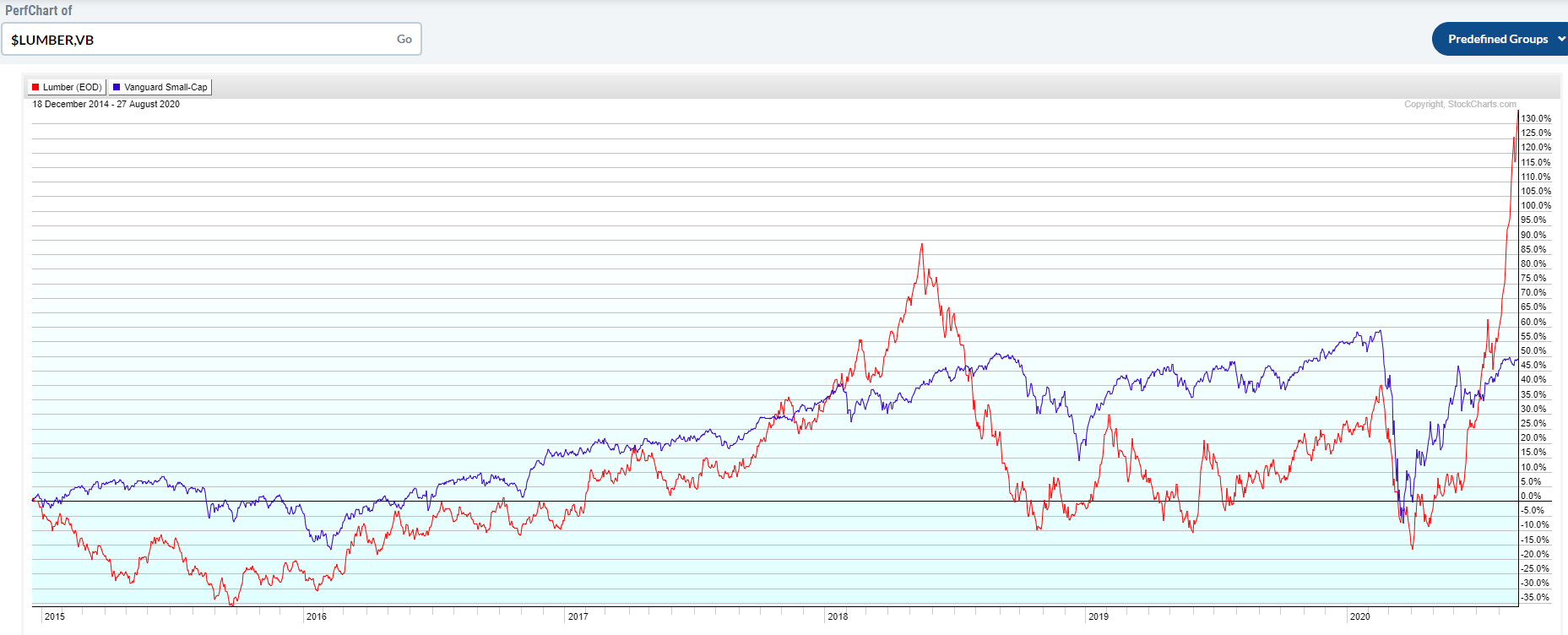
Lumber is screaming that small caps should be outperforming, consistent with my 2015 NAAIM award white paper.

In each of the past three calendar years, small cap stocks in the U.S. have lagged their large cap counterparts by roughly 6-7% per year. On a strategic basis,