
Loading…
Loading…


Managing downside risk in portfolios has been a big theme this year as we navigate uncertainty in the face of a presidential election, the expectation of rate cuts as Federal Reserve monetary policy shifts, and geopolitical tensions across the globe. Buffer ETFs, as a category, have risen to that challenge.
In this article, we explore the basics of buffer ETFs and share our thoughts on why we think these ETFs could be a powerful tool for managing risk. By selecting a buffer ETF with a predefined payoff profile that best matches one's preferences, one can achieve the equivalent of a customized option strategy to position for a pullback. The ideal scenario for using buffer ETFs would be when the market has performed exceptionally well and is at risk of a potential pullback.

Hello, VettaFi Voices! Whenever I read about the economy in 2023, the one word that comes up repeatedly in various forms is “uncertain.

Once upon a time, dividends played a starring role in equity markets—until 14 years of easy money whetted investors' appetite for risk and created a massive tailwind for unprofitable, long-duration growth stocks. Valuations appear to be attractive: Stocks yielding north of 2.5% are trading near their largest discount to the equity market in recent memory.

The S&P 500 Index has rebounded sharply off its previous low in October, closing up 14% on Feb. 17 since October's trough. The market could continue to rally, of course.

Both Sides Now: The Active Vs. Passive Debate Revisited (Podcast)

The VIX climbed above 40 on Wednesday, reflecting investors' growing concerns.
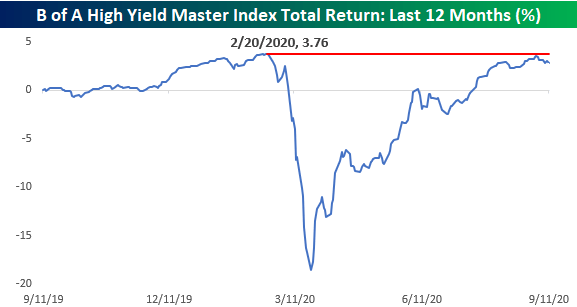
Performance in the high yield market hasn't been quite as strong as the S&P 500. While total return levels in the high yield market are important to track, spreads in high yield debt relative to treasuries provide a more useful barometer.
SEC filings for BOCT aren't indexed yet (common for recently launched funds). Browse the issuer's filings on SEC EDGAR directly.