
Loading…
Loading…


ARK ETF Trust - ARK Autonomous Technology & Robotics ETF is an exchange traded fund launched and managed by ARK Investment Management LLC. It invests in public equity markets of global region. The fund invests in stocks of companies operating across autonomous technology and robotics companies, information technology sectors includes focus on and benefit from the development of new products or services, technological improvements and advancements in scientific research related to, among other things, disruptive innovation in automation and manufacturing, (“Automation Transformation…
Is ARKQ's expense ratio expensive, average, or a steal for its category?
Pro reveals the verdict on a 5-tier spectrum calibrated against ICI 2025 industry averages, with strategy-aware bands so the comparison is meaningful.

Markets are broader than headlines suggest. AI is driving wider economic growth in Canada. Why Canada is positioned to benefit from the AI buildout.

Are her big ideas turning into big returns?

ARK Autonomous Technology & Robotics ETF (ARKQ) has delivered higher trailing returns. Global X - Robotics & Artificial Intelligence ETF (BOTZ) offers a lower expense ratio and a higher dividend yield for income-focused investors.
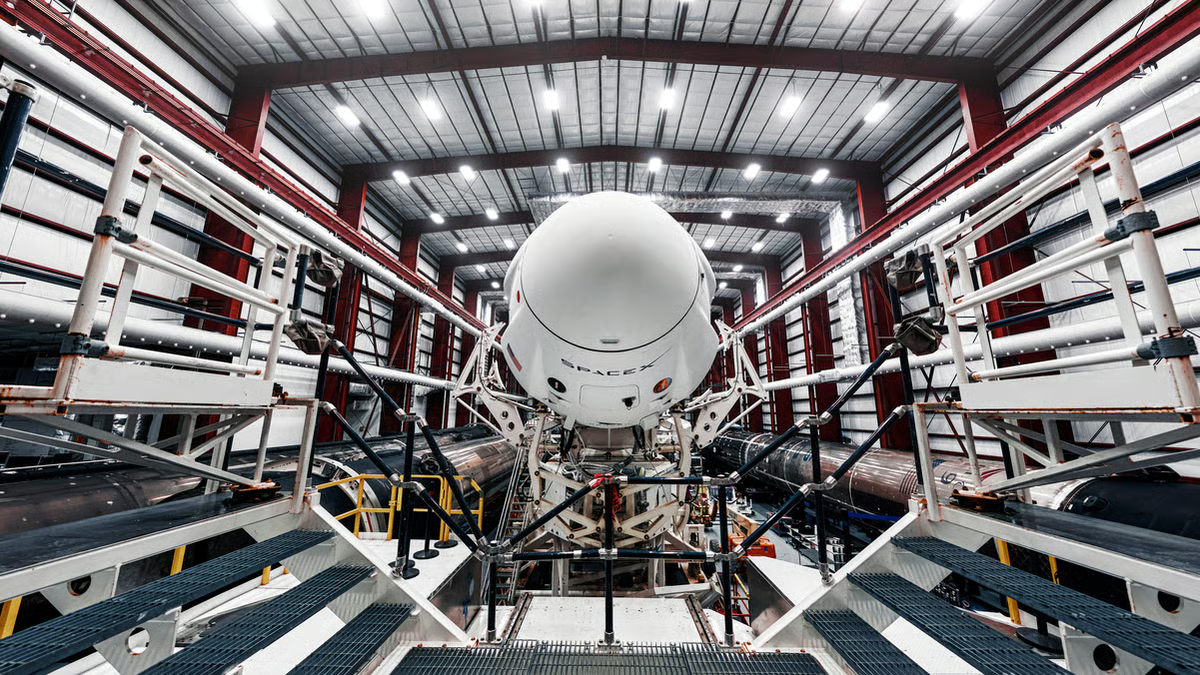
The Ark Invest founder is betting big on SpaceX.

The ARK Autonomous Technology & Robotics ETF (ARKQ) is best rated a Hold, with a bias to accumulate through volatility. ARKQ's portfolio has shifted toward quality and momentum names, with only 20-25% in true long-duration disruptive tech. Defense allocations provide differentiated, resilient exposure, while AI infrastructure and disruption themes face mixed near- and long-term outlooks.